
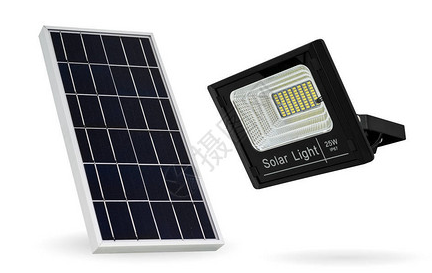
Fences serve as boundary protection and demarcation facilities for outdoor areas. Lack of lighting at night can pose safety hazards, leading many to seek additional lighting. Solar LED lights, with their energy-saving, wiring-free, and easy-to-install characteristics, have become a popular choice for fence lighting. However, some users wonder: given the diverse materials and limited load-bearing capacity of fences, are solar LED lights suitable? The answer is yes. As long as the correct model is selected and installed correctly, solar LED lights can absolutely be installed on fences, precisely addressing needs such as nighttime lighting and anti-theft warnings around the fence. Below is a detailed analysis of feasibility, core advantages, installation points, and scene adaptation to help you efficiently upgrade your fence lighting.How to Choose the Height of Solar Streetlight Pole?
Core Feasibility: There are no technical obstacles to the compatibility of solar LED lights with fence scenarios. In terms of load-bearing requirements, most solar LED lights designed for small outdoor lighting on the market weigh between 50-500 grams. Common fence materials such as wrought iron, aluminum alloy, and PVC can easily support these lightweight lights without deformation or damage. From a power supply perspective, fences are mostly located outdoors, providing ample sunlight for solar panels. Even in partially shaded areas, low-power solar LED lights can meet nighttime lighting needs through short daytime charging. In terms of installation compatibility, solar LED lights offer flexible installation methods, adapting to different fence materials without complex modifications; installation can be completed by a single person.Can Solar LED Lights Be Installed on Doorplates?
Solar LED lights installed on fences offer four core advantages over traditional mains-powered lights. First, installation is convenient and requires no wiring. There’s no need to damage the fence structure or lay electrical wires; they are easily fixed using clips, adhesive, screws, etc., and are compatible with various fence materials such as wrought iron, wood, and PVC. They are easy to use even for renters or in situations where electrical wiring cannot be altered, with installation typically taking no more than 10 minutes. Second, they are energy-efficient and cost-free. Relying on solar panels to absorb sunlight and convert it into electricity, they charge during the day and automatically illuminate at night, completely independent of the power grid. Long-term use incurs no electricity bills, aligning with green energy conservation principles. Thirdly, they offer a high safety factor, using low-voltage DC power (typically 3.7-12V), avoiding the risk of high-voltage leakage from traditional mains lights, making them especially suitable for fences around homes with elderly people or children. Most products also boast an IP65 or higher waterproof rating, capable of withstanding harsh outdoor environments such as rain, dew, and sandstorms, ensuring greater peace of mind. Fourthly, they offer strong functional adaptability, with models featuring human body sensors and light sensors for control, achieving automatic high brightness when someone approaches and low brightness for energy saving when no one is present, balancing lighting and anti-theft warning needs.Solar Street Light Repair Tutorial
To ensure the stable operation of solar LED lights on fences, three key points must be considered during installation. First, precise model selection is crucial. Prioritize “lightweight, integrated” solar LED lights. These lights integrate the solar panel, LED light source, lithium battery, and controller into a single unit, resulting in a compact and unobtrusive design that won’t compromise the fence’s protective function. A power rating of 1-5W is sufficient for a 3-8 meter illumination range around the fence. For larger areas requiring illumination, multiple lights can be installed at intervals. Secondly, consider the installation location. Solar panels should face a sunny direction (preferably south) to ensure 3-5 hours of direct sunlight daily, avoiding obstruction by trees, walls, etc. The light fixtures should be installed in the upper-middle part of the fence, with the light source angled downwards to avoid direct light into pedestrians’ eyes, while ensuring complete illumination of the ground around the fence without blind spots. Finally, consider the mounting method. Choose according to the fence material: wrought iron and aluminum alloy fences can be fixed with clips or screws for strong sturdiness; wooden fences can be fixed with self-tapping screws to avoid damaging the wood structure; PVC fences are recommended to use strong adhesive or special plastic clips to prevent cracking caused by drilling.
Adaptation suggestions for different fence scenarios to improve lighting effect and practicality. Firstly, for residential courtyard fences, prioritize solar LED lights with motion sensors. These automatically brighten when someone approaches and dim to save energy when no one is around, balancing lighting and security needs. It is recommended to install one light every 3-5 meters to create a safe nighttime environment in the courtyard. Secondly, for fences around farms and orchards, which require wide-area warning lighting, 3-5W high-brightness solar LED lights can be selected, installed at intervals of 5-8 meters, with infrared sensing function to effectively warn intruders and prevent wild animals from approaching. Thirdly, for fences around parks and scenic areas, where aesthetic lighting and atmosphere are important, simple-designed solar LED light strips or string lights can be installed along the fence outline, providing basic lighting while enhancing the nighttime landscape; warm white light fixtures can also be chosen to create a welcoming atmosphere. Fourthly, for fences around construction sites and industrial parks, which require high-intensity, long-duration lighting, solar LED lights with a power of 5-10W and a battery capacity of 2000mAh or more can be selected to ensure continuous nighttime lighting for more than 8 hours, combined with waterproof and impact-resistant design to cope with the complex environment of construction sites.
Key details for use and maintenance to extend lifespan and ensure lighting effect: First, regular cleaning is essential. Every 1-2 months, clean the surface of the solar panels to remove dust, fallen leaves, bird droppings, etc., to avoid affecting charging efficiency. Cleaning can be done with a soft cloth dampened with water; no corrosive cleaning agents are needed. Secondly, seasonal adjustments are necessary. In winter, when the sun’s angle is lower, the tilt angle of the solar panels can be adjusted appropriately (30-45° recommended) to improve charging efficiency. In summer, during high temperatures, avoid prolonged exposure of the lights to direct sunlight; choose well-ventilated installation locations to reduce the impact of high temperatures on battery life. Thirdly, regular inspections are crucial. Check the fixture’s fixation every six months; tighten it promptly if loosening occurs. Inspect the light body’s sealing performance; address any water ingress or fogging promptly to prevent short circuits and damage.
In summary, solar LED lights are perfectly suitable for installation on fences and represent an excellent solution for fence lighting. Their lightweight, wiring-free, energy-efficient, and safe advantages precisely meet the needs of fence scenarios. By selecting the correct model and installing according to specifications, the problem of insufficient nighttime lighting around fences can be easily solved. Whether it’s a residential courtyard, farm, park, or construction site fence, adding solar LED lights can upgrade lighting while ensuring safety, practicality, and aesthetics.