
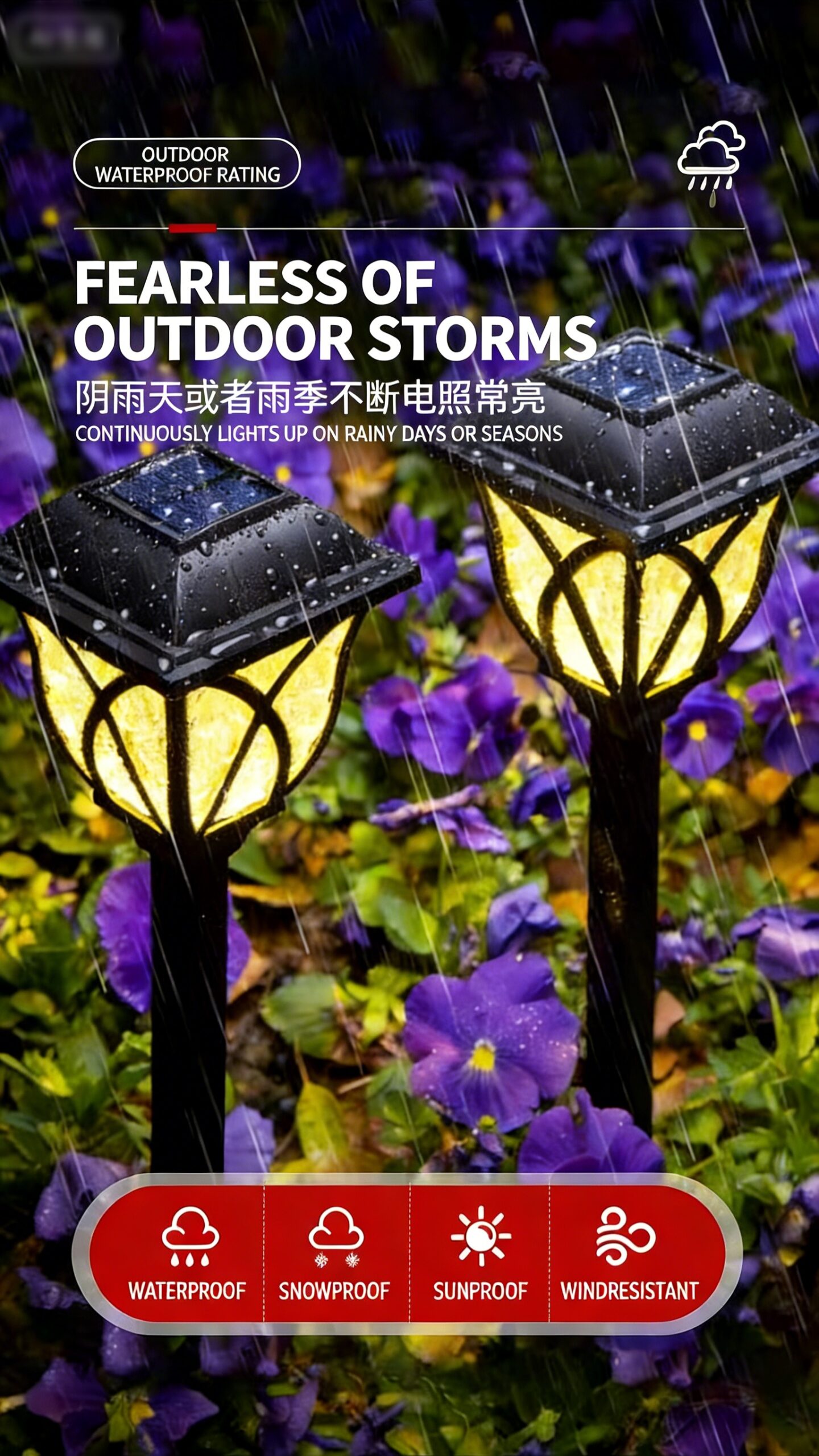
Solar garden lights have become a popular choice for courtyard and garden lighting decoration due to their energy-saving, aesthetically pleasing, and wiring-free advantages. The correctness of ground installation directly determines its lighting effect, stability, and lifespan—improper installation can easily lead to light fixtures tipping over, insufficient charging, or blind spots. The core logic of ground installation of solar garden lights is “precise selection + standardized fixing + scientific site selection,” requiring no professional construction experience; even beginners can easily get started. This article breaks down the practical process in detail, covering aspects such as preliminary preparation, core installation steps, scene adaptation techniques, and maintenance points.Can Solar LED Lights Be Connected to Electricity?
Preliminary Preparation: Selecting the right model and preparing the necessary tools lays the foundation for installation. First, precise selection is crucial. The type and parameters of the lighting fixtures must be matched to the garden’s specific environment: For courtyard paths and flower beds, ground-mounted solar lights (30-60cm pole length) are preferred for their ease of installation and space-saving design; for lawns and relaxation areas, in-ground solar lights (recessed installation, only the light-transmitting surface is exposed) offer both illumination and aesthetics; 1-5W power is sufficient. A single light can cover 3-5㎡ in a small garden, while larger gardens can have lights spaced 3-5 meters apart. Second, tool preparation is essential. Basic tools include a measuring tape, marker, small shovel (or electric drill with a drill bit), rubber mallet, and screwdriver. For hard surfaces (such as slate or concrete), expansion screws and an impact drill are also necessary. Waterproof sealant and insulating tape should also be prepared for sealing and reinforcement.How to Adjust the Time of a Solar Street Light
Core Installation Steps: A 3-step process for a stable and standardized installation. Step 1: Scientific Site Selection and Marking. The solar panels should face a sunny direction (preferably south) to ensure 4-6 hours of direct sunlight daily, avoiding obstructions such as trees and walls. The lights should be installed in areas requiring illumination (such as along walkways or flower bed edges), avoiding direct sunlight on pedestrians’ eyes and ensuring no blind spots. Measure the spacing with a tape measure and mark the installation points with a marker. For ground-mounted lights, a spacing of 3-5 meters is recommended, while for in-ground lights, the spacing can be shortened to 2-3 meters to ensure uniform lighting.Solar Garden Light Ground-Plug Installation
The second step is precise fixing according to the ground material. Ground-mounted installation is suitable for soft ground (soil, lawn): Dig shallow holes (5-10cm deep; if the soil is hard, drill holes with a stick first) at the marked points. Insert the bottom of the solar light pole into the hole, adjust the verticality, backfill and compact with soil, or gently tap the top of the pole with a rubber mallet to help secure it and ensure it doesn’t wobble. For hard surfaces (slate, concrete, tiles), in-ground or drilled mounting is suitable: For in-ground fixtures, first use an impact drill to drill holes according to the fixture base size, clean the dust from the holes, insert the fixture, and seal the gaps with waterproof sealant; for plug-in fixtures, a base-fixed type can be used. Secure the base to the ground with expansion screws before installing the fixture to avoid damaging the ground structure.
The third step is testing and reinforcement. After installation, first check if the fixture is vertical and securely fixed, and gently shake the light pole to test stability; then wipe the surface of the solar panel clean to ensure no dust obstructs it; finally, turn on the fixture’s test function, simulating a nighttime environment by covering the solar panel, to check if it lights up normally. If equipped with light sensor and human body sensor functions, test their sensitivity one by one to ensure proper functioning. If the fixture cables are exposed, wrap them with insulating tape for reinforcement and seal the joints with waterproof sealant to prevent rainwater seepage.
Adaptive installation techniques for different garden scenarios. Firstly, for courtyard walkways: Choose ground-mounted solar lawn lights, installed along the edges of both sides of the walkway. The light pole height should be controlled at 30-40cm to avoid tripping pedestrians. The light source angle should be slightly tilted towards the center of the walkway to ensure clear illumination. Secondly, for flower beds and landscaped areas: Use aesthetically pleasing in-ground solar lights, embedded in the edges of flower beds or around landscape features, with only the light-transmitting surface exposed to avoid obstructing flowers and vegetation. Use warm white light sources to enhance the nighttime ambiance. Thirdly, for lawn relaxation areas: Choose height-adjustable ground-mounted solar lights, adjusting the pole height to 50-60cm to ensure lighting coverage of the relaxation area. If the lawn soil is soft, a metal sleeve can be fitted to the bottom of the light pole before inserting it into the ground to increase stability.
Post-maintenance points: Extend the lifespan and ensure optimal lighting performance. First, regular cleaning is essential. Every 1-2 months, clean the surface of the solar panels, removing dust, fallen leaves, bird droppings, etc. Wipe with a soft cloth dampened with water, avoiding the use of corrosive cleaning agents to ensure charging efficiency. Second, seasonal adjustments are necessary. In winter, when the sun’s angle is lower, adjust the tilt angle of the solar panels appropriately (30-45° recommended) to improve charging efficiency. In summer, avoid prolonged exposure of the lights to direct sunlight; install them in a well-ventilated area. Third, regular inspections are crucial. Check the fixing condition every six months. If loosening is found, reinforce it promptly. Before the rainy season, focus on checking the waterproof seal. If water gets into the light fixture or fogs up, disassemble, dry, and reseal it immediately.
In summary, the key to successful ground installation of solar garden lights is “choosing the right type, finding the right location, and securing them firmly.” By following scientific installation steps and scene-appropriate techniques, you can easily upgrade your garden’s nighttime lighting. Whether the ground is soft or hard, as long as the installation method is precisely matched, both stability and aesthetics can be achieved. For those seeking energy-saving and convenient garden decoration, ground installation of solar garden lights is a highly cost-effective choice, easily creating a safe and warm nighttime garden atmosphere.