
In the outdoor lighting field, solar street lights have become the mainstream choice for municipal roads, rural roads, and industrial parks due to their advantages such as energy saving, environmental friendliness, and convenient installation. However, the outdoor environment is complex and changeable; rainwater, dew, and moisture can easily penetrate the equipment, leading to short circuits, component damage, and other malfunctions. Therefore, waterproofing rating has become one of the core indicators for evaluating the quality of solar street lights. This article will provide a comprehensive understanding of the relevant knowledge regarding the waterproofing ratings of solar street lighting systems, helping you to make accurate selections.Lightning Protection Design for Solar Street Lighting Systems: The Core Guarantee for Safe Outdoor Operation
First, we need to clarify the definition and labeling standards for waterproofing ratings. Currently, the globally accepted standard for waterproofing ratings is the IP (Ingress Protection Rating), which consists of two digits. The first digit represents the dustproof rating, and the second digit represents the waterproof rating. The higher the number, the stronger the protection. For solar street lights, the key focus is on the second digit, which typically ranges from IPX4 to IPX8.The Measurement of Light: The Spatial Science of Solar Streetlight Installation Distance
Different waterproofing ratings correspond to different levels of protection and are suitable for different usage scenarios. IPX4 rating provides splash protection, resisting water droplets from any direction, suitable for dry, clean environments such as courtyards and parks; IPX5 rating provides jet protection, withstanding the impact of low-pressure water jets, suitable for most urban roads, squares, and other general outdoor environments; IPX6 rating provides strong jet protection, resisting high-pressure, strong water jets, suitable for harsh environments such as rainy areas and coastal typhoon zones; IPX7 rating allows for short-term immersion in 1 meter of water without damage, while IPX8 rating allows for long-term immersion in water at specified pressures and depths; the latter two are commonly used in locations near water sources, such as lakesides and docks.
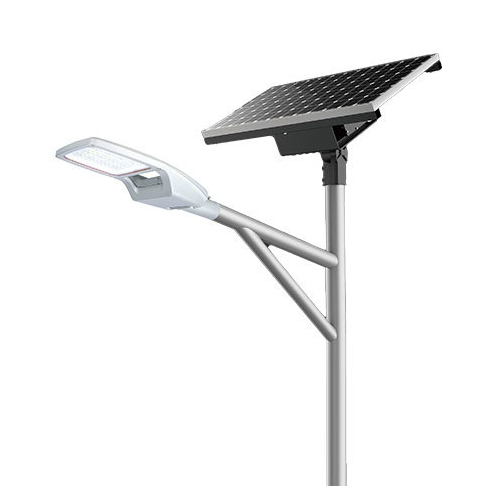
The waterproof performance of a solar street lighting system is not determined by a single component, but requires the coordinated protection of all components, including the lamp body, battery compartment, controller, and wiring. The lamp body typically employs a sealed structure with waterproof sealing rings to prevent rainwater from seeping in through gaps between the lamp cover and the lamp housing. The battery compartment, as the housing for the core energy storage component, requires a high-strength sealing design to prevent moisture intrusion that could cause short circuits or battery degradation. The controller, as the system’s “brain,” must be equipped with waterproof connectors at its interfaces to ensure signal transmission and power supply safety. Wiring points must be reinforced and sealed using waterproof tape, heat shrink tubing, etc., to prevent rainwater from seeping into the equipment along the wiring.Are Solar LED Lights Really Suitable for Your Balcony?
In actual selection, the waterproof rating must be precisely matched to the climatic conditions of the usage scenario. For example, in rainy southern regions or typhoon-prone coastal areas, it is recommended to choose solar streetlights with an IPX6 or higher rating; in arid inland areas, an IPX5 rating is sufficient. At the same time, avoid blindly pursuing high waterproof ratings, as excessively high ratings increase product costs. Appropriate matching to the needs of the scenario is key to maximizing cost-effectiveness.
For purchases, please add the following WhatsApp contact.
Furthermore, routine maintenance can also affect the waterproof performance of solar streetlights. Over time, waterproof seals may age and break, and sealing material at wiring points may detach. Therefore, regularly inspecting the condition of sealing components and promptly replacing aging parts can effectively extend the equipment’s lifespan.
In short, waterproof rating is crucial for the stable operation of solar streetlights in outdoor environments. Understanding the meaning and applicable scenarios of different waterproof ratings, selecting suitable products based on your own needs, and performing proper daily maintenance are essential to ensuring that solar streetlights fully realize their energy-saving advantages and provide long-lasting and stable outdoor lighting.