
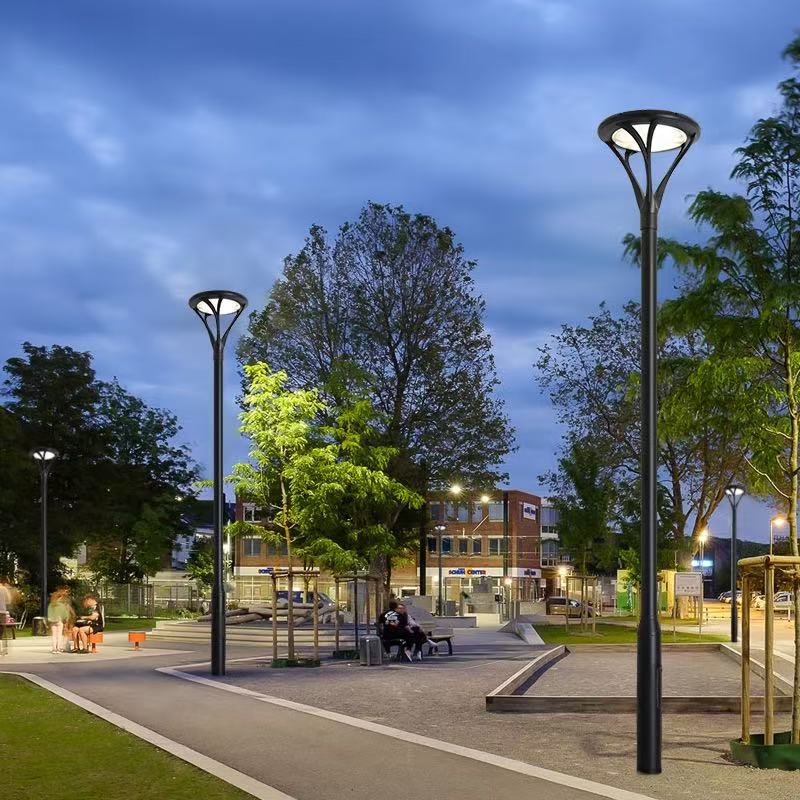
With the advancement of rural construction, upgrading rural road lighting has become an important requirement for improving living quality and traffic safety. Solar streetlights, with their energy-saving, wiring-free, and low-maintenance characteristics, are gradually becoming a popular choice for rural lighting renovation. However, many people have doubts: given the complex terrain and varying light conditions in rural areas, are solar streetlights truly suitable? In fact, solar streetlights are not only suitable for rural areas, but they can also precisely address the core pain points of rural lighting, making them an ideal solution for rural road lighting. Below is a detailed analysis from aspects such as adaptability, core advantages, and key points for selection and installation to help you fully understand them.Can Solar LED Lights Have Replaceable Batteries?
The natural and infrastructure conditions of rural areas are highly compatible with the characteristics of solar streetlights. From an energy supply perspective, rural areas have less industrial pollution and abundant sunshine resources. Most areas have more than 2000 hours of sunshine per year, providing a stable energy source for solar streetlights. Even in cloudy or rainy weather, models equipped with large-capacity lithium batteries can guarantee 3-5 days of continuous lighting. From an infrastructure perspective, some remote rural areas suffer from insufficient power grid coverage. Traditional municipal streetlights require road excavation and pole erection for cable laying, resulting in long construction periods and high costs. Solar streetlights, however, do not rely on the power grid and can operate independently as long as there is sunlight, perfectly solving the lighting problem in remote areas. Furthermore, rural roads are mostly country lanes and village roads with relatively low vehicle and pedestrian traffic, requiring more flexible control over lighting brightness and duration. Solar streetlights can intelligently adjust to adapt to different scenarios.Ground-mounted or Wall-mounted Solar Garden Lights
Compared to traditional municipal streetlights, solar streetlights better meet the actual needs of rural areas, with core advantages in three main aspects. First, they offer significant cost advantages and higher long-term cost-effectiveness. While there are initial equipment purchase costs for solar streetlights, there are no electricity bills, saving on basic engineering costs such as cable laying and transformer installation. Later maintenance only requires periodic cleaning of the solar panels and checking of the battery status, with maintenance costs less than one-third of traditional streetlights. The initial investment can generally be recovered in 3-5 years, making it more economical in the long run. Second, they are easy and flexible to install, adapting to complex terrain. Rural areas are mostly mountainous and hilly, with winding roads. Solar streetlights feature an integrated design, requiring only a simple base to be poured at the base of the pole during installation. No large-scale excavation is needed, and installation can be completed by a single person. They adapt easily to both straight village roads and sloping paths, with a construction period only half that of traditional streetlights. Thirdly, they offer a higher safety factor and are easier to maintain. Solar streetlights use low-voltage DC power, avoiding the safety hazards of high-voltage cable leakage and electric shock, making them especially suitable for rural environments with elderly people and children. Furthermore, they operate without manual supervision, featuring automatic start/stop functionality based on light sensors, charging during the day and automatically turning on at night, reducing the hassle of manual switching.Solar Garden Lights with Automatic Sensing
When selecting solar streetlights for rural areas, precise selection based on the specific scenario is crucial to maximize their effectiveness. Firstly, power and brightness selection are important. For main village roads, a 30-50W power rating is recommended to ensure a lighting coverage range of 10-15 meters. For country roads and areas around courtyards, a 10-20W power rating is suitable, balancing energy saving with basic lighting. Secondly, regarding battery and solar panel selection, lithium batteries (capacity 5000mAh or higher) are preferred, as they are lighter and have a longer lifespan (5-8 years) compared to lead-acid batteries. For solar panels, monocrystalline silicon is recommended, as it offers higher conversion efficiency (over 20%) and is suitable for varying rural sunlight conditions. Finally, consider the protection rating. Rural areas experience frequent wind, rain, and dust storms, so products with an IP65 or higher waterproof rating are necessary to ensure the light body, battery, and controller are not damaged by moisture. Additionally, choose light poles with a wind resistance rating of ≥12 to cope with strong winds.
Small details in installation and maintenance can further improve the stability of solar streetlights. During installation, pay attention to the orientation of the solar panels, preferably installing them at a 45° south angle to avoid obstruction by trees or buildings. The recommended installation height for the light poles is 3-6 meters, adjusted according to the road width to ensure no blind spots in illumination. For routine maintenance, clean the surface of the solar panels of dust and fallen leaves quarterly to improve charging efficiency; check the battery connections annually to prevent loosening and oxidation; and in winter, clear snow around the light body to ensure normal sunlight absorption by the solar panels.
In summary, solar streetlights perfectly meet the needs of rural areas in terms of energy adaptability, cost control, and installation flexibility, making them an excellent choice for upgrading rural road lighting. As long as the appropriate type is selected based on rural lighting conditions and road types, and basic installation and simple maintenance are carried out, solar streetlights can operate stably for a long time, improving nighttime traffic safety in rural areas and contributing to the construction of green villages, thus combining practicality and social benefits.