
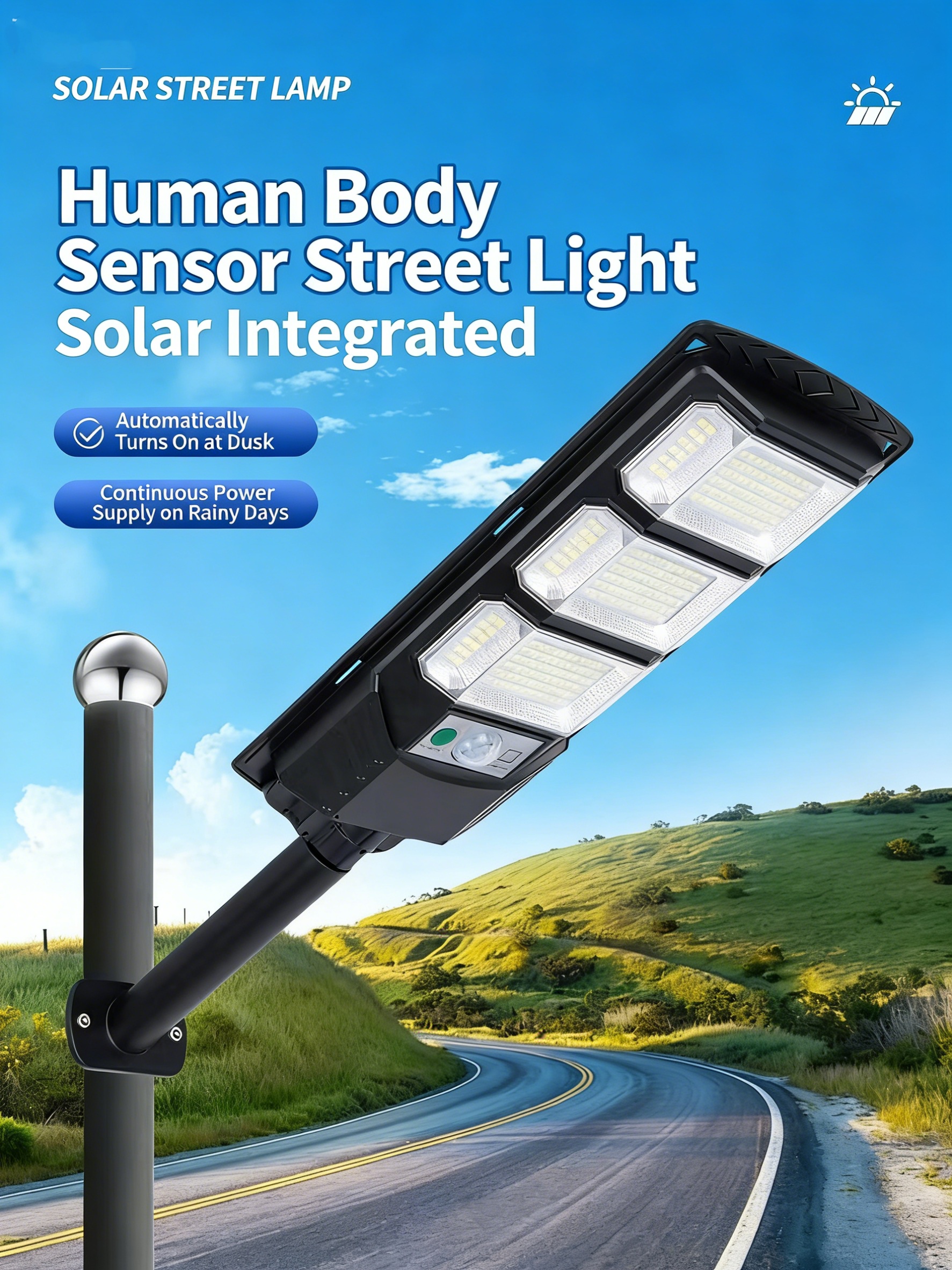
Billboards are crucial for information dissemination and commercial advertising, and their nighttime visibility directly impacts advertising effectiveness. Many businesses and operators want to add lighting to their billboards, and solar LED lights, with their advantages of no wiring, energy efficiency, and flexible installation, have become a popular choice. However, some users wonder: are solar LED lights suitable for the high-altitude environment, structural load-bearing capacity, and lighting conditions of billboards? The answer is yes. As long as the correct model is selected and installed correctly, solar LED lights can absolutely be installed on billboards, precisely addressing their nighttime lighting and energy-saving needs. Below is a detailed analysis from the aspects of feasibility, core advantages, installation points, and scenario adaptation, helping you efficiently upgrade your billboard lighting.Can Solar LED Lights Be Installed in Carports?
Core Feasibility: There are no technical obstacles to the compatibility of solar LED lights with billboard scenarios. From a power supply perspective, billboards are mostly located in open outdoor areas (such as roadsides, rooftops, and plazas), without tall obstructions, providing ample direct sunlight for solar panels. Even rooftop billboards, by adjusting the installation angle of the solar panels, can guarantee 4-6 hours of effective charging time per day. The lithium batteries in low-power (3-10W) solar LED lights, once charged, can meet 8-12 hours of nighttime lighting needs, fully covering the billboard’s nighttime display hours. In terms of load-bearing capacity and size, integrated solar LED lights weigh only 100-500 grams and can be as small as 15×20×6cm. Whether the billboard has a metal frame, acrylic panel, or printed fabric, its frame or bracket can easily support it without causing structural stress or obstructing the advertising content. Regarding installation compatibility, the billboard’s frame, beams, and columns can all serve as installation carriers without damaging the advertising image or main structure, making them highly adaptable.Can Solar LED Lights Be Installed on Fences?
Solar LED lights installed on billboards offer four core advantages over traditional mains-powered lights. Firstly, installation is convenient and requires no wiring. There’s no need to connect to municipal power lines or lay electrical wires at height. The light fixture is simply fixed in place using stainless steel screws and clips. Installation can be completed by a single person with simple tools, significantly reducing the difficulty and cost of high-altitude work, making it particularly suitable for upgrading existing billboards. Secondly, it’s energy-efficient and cost-free. Relying on solar panels to absorb sunlight and convert it into electricity, it automatically charges during the day and lights up at night, completely independent of the power grid. Long-term use incurs no electricity bills, significantly reducing advertising and operating costs for commercial operators, aligning with green energy conservation principles. Thirdly, it boasts a high safety factor. Using 3.7-12V low-voltage DC power, it avoids the risk of high-voltage leakage from traditional mains lights at heights. Most products have a waterproof rating of IP65 or higher, capable of withstanding rain, strong winds, sandstorms, and other harsh outdoor weather conditions, making it safer for use at heights. Fourth, the lighting effect is adaptable, allowing for the selection of light sources with different color temperatures such as warm white and cool white, precisely matching the color presentation of the advertising image. It also supports brightness adjustment and timed on/off functions, enabling flexible control of lighting periods and brightness according to advertising display needs, enhancing the nighttime advertising effect.How to Choose the Height of Solar Streetlight Pole?
To ensure the stable operation of solar LED lights on billboards, three key points must be considered during installation. First, accurate model selection is crucial. Prioritize “integrated waterproof” solar LED lights, as these have high integration and good sealing, making them suitable for high-altitude outdoor environments. Power selection should be based on the billboard area: 3-5W is sufficient for small billboards (3-5㎡), 5-8W for medium-sized billboards (6-15㎡), and multiple 5-8W lights can be installed at 3-5 meter intervals for large billboards (over 15㎡). Functionally, prioritize models with light sensors and timers, achieving “automatic lighting at dusk and automatic shut-off at dawn,” eliminating the need for manual operation. Secondly, consider the installation location. Solar panels should face the sun (preferably south) and be installed on the top or side of the billboard in an unobstructed area to ensure uninterrupted sunlight from the advertising image. The light fixtures are recommended to be installed around the billboard frame or above the image, using a symmetrical layout to ensure even light coverage of the entire advertising image and avoid blind spots or direct light shining into pedestrians’ eyes. Finally, consider the mounting method. Choose according to the billboard material: metal frame billboards can be fixed with stainless steel screws for strong stability; acrylic and printed fabric billboards are recommended to use a combination of clips and waterproof adhesive for double fixing to avoid damaging the advertising image or the structure of the material.
Adaptation suggestions for different billboard scenarios to improve lighting effect and practicality. Firstly, for small home/shop billboards (such as store signs and light boxes), prioritize adhesive-backed integrated solar LED lights with strong waterproof adhesive for fixing, requiring no drilling and not damaging the sign structure. If the sign location has insufficient sunlight, split-type solar LED lights can be chosen, with the solar panel installed on a sunny spot on the shop roof and connected to the light fixture via an extension cable. Secondly, for medium-sized commercial billboards (such as roadside pillar advertisements and wall advertisements), it is recommended to use a “multiple distributed installation” approach, evenly arranging the lights along the billboard’s edge to ensure uniform illumination. Models with remote control functionality can be selected for convenient remote adjustment of brightness and on/off times. Thirdly, for large high-altitude billboards (such as rooftop advertisements and highway billboards), reinforced solar LED lights with a wind resistance rating of ≥12 should be selected. During fixing, expansion screws and clips should be used for double reinforcement to ensure stability in strong winds. High-capacity lithium batteries should also be used to improve lighting endurance during continuous cloudy or rainy weather.
Key details for use and maintenance are crucial for extending lifespan and ensuring lighting performance. First, regular cleaning is essential. Every 1-2 months, clean the surface of the solar panels to remove dust, bird droppings, fallen leaves, etc., to avoid affecting charging efficiency. Use a long-handled tool and a soft cloth for cleaning; no high-altitude work is required. Second, regular inspection is crucial. Check the fixture’s fixation every six months. If loose, tighten it immediately. Also check the sealing performance of the lamp body; if water ingress or fogging is found, address it promptly to prevent short circuits and damage. Third, seasonal adjustments are necessary. In winter, when the sun’s angle is lower, adjust the solar panel’s tilt angle appropriately (30-45° recommended) to improve charging efficiency. In summer, avoid installing the fixtures directly on the top of the billboard in direct sunlight; side installation is preferable to reduce the impact of high temperatures on battery life.
In summary, solar LED lights can be perfectly installed on billboards and are an excellent solution for nighttime billboard lighting. Their advantages—no wiring required, energy-saving and safe, easy installation, and adaptable lighting—precisely meet the needs of high-altitude outdoor billboard scenarios. By selecting the right model and installing correctly, you can easily improve the billboard’s nighttime visibility and advertising effectiveness. Whether it’s a small store sign or a large high-altitude billboard, lighting upgrades can be achieved by installing solar LED lights, balancing advertising effectiveness, cost-effectiveness, and safety.