
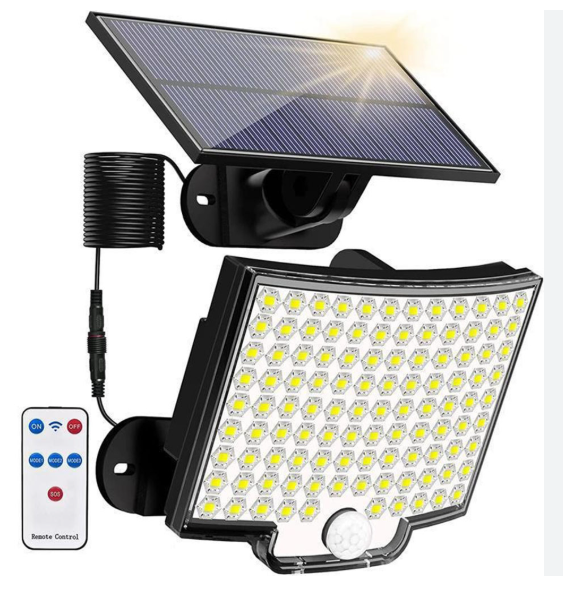
Can Solar LED Lights Work in the Rain? In-depth Analysis of Their Working Principle and Rain Performance
Whenever it’s raining, many users of solar LED lights inevitably wonder: Will these lights, which rely on the sun, still work in the rain? The answer is yes, solar LED lights are designed to work normally in the rain, but their performance is like a farmer whose harvest depends on the weather. To fully understand this, we need to start with their core working principle.How long does it take to charge a solar LED light?
I. Core Logic: Separation of Energy Storage and Discharge
For purchases, please add the following WhatsApp contact.
Solar LED lights don’t directly use solar energy at night. Their workflow follows a clear two-step strategy:
- Daytime Energy Storage Stage: Whether it’s a bright sunny day or a dimly lit rainy day, the solar panels continuously work, converting any form of light energy into electrical energy and storing it in the built-in battery (usually a lithium-ion or lithium iron phosphate battery).
- Nighttime Discharge Phase: At night, the light sensor automatically activates, and the lights rely entirely on the pre-stored energy in the battery to drive the high-efficiency LED bulbs.
Therefore, a key conclusion is that whether a solar light illuminates at night depends on the battery’s charge, not on whether it’s raining. As long as the battery has a charge reserve, it can still provide illumination in the rain.Solar Garden Light Design
II. The Real Challenge in Rainy Days: Reduced Battery Life
Since it’s usable, why are people still hesitant to use it in the rain? This is because the main impact of rain is not functional failure, but a significant reduction in the lighting duration. This is due to two direct factors:Reasons Why Solar Garden Lights Don’t Work at Night
· A sharp drop in charging efficiency: On an ideal sunny day, the solar panel can be charged close to full capacity. However, in cloudy or rainy weather, the sunlight intensity may be only one-tenth or even less than on a sunny day, resulting in a weak charging current that the battery cannot fully charge. If the rainy weather is short-lived, the energy stored from the previous sunny days may suffice; however, if there are several consecutive days of rain, the battery will only deplete, gradually running out of power.
- Lighting Strategy Adjustment: To cope with power shortages, high-quality solar lights will activate intelligent management programs: when low battery is detected, they will automatically switch from high-brightness mode to energy-saving low-light mode, prioritizing longer lighting time rather than instantaneous brightness. This explains why you might feel the light is not as bright as usual on rainy nights.
Simply put: sunny days are like quickly charging your “power bank,” while rainy days are like slowly “drip-feeding.” The lighting can still continue, but how long and how bright it will be depends on how much “power” you’ve stored up.
III. Key Elements for Ensuring Reliable Use in Rainy Days
To make your solar lights perform more reliably in rainy days, you need to focus on the product’s design and proper installation and maintenance:
- Waterproof Rating is the Safety Minimum: Solar lights used outdoors must have good waterproof sealing. Please look for the IP protection rating marking. IP65 is spray-proof and can easily handle light to moderate rain; IP66/IP67 can withstand strong sprays or short-term immersion and can withstand heavy rain. 1. Ensure the battery compartment cover, cable interfaces, and other parts are properly sealed during installation.
- Battery capacity is the “core of endurance”: This is the key parameter determining how long the battery can last on cloudy or rainy days. The larger the capacity (expressed in milliampere-hours, mAh or watt-hours, Wh), the more electrical energy it stores. If budget allows, prioritize models with larger capacity batteries, as this means a more powerful “energy reserve.”
- Solar panels and energy efficiency are “increasing revenue and reducing energy consumption”: In low-light conditions, larger solar panels or those with higher conversion efficiency can capture more light energy. Simultaneously, using high-efficiency, low-power LEDs means longer illumination with the same amount of electricity, achieving “energy saving.”
- Installation location is crucial for long-term protection: Install solar panels in locations that receive the most diffused sunlight throughout the day, avoiding long-term shading from eaves or trees. Even on cloudy days, diffused sunlight from an open sky is a valuable energy source. Regularly wiping the panels to remove dust and rainwater residue helps maintain optimal charging efficiency.
Conclusion and Purchase Recommendations
In summary, solar LED lights can be used in the rain, but their lighting effect will be reduced with prolonged periods of overcast and rainy weather. They are not designed for extreme weather conditions, but rather for efficient energy utilization and storage during sunny days to meet all nighttime lighting needs, including rainy nights.
When purchasing, if you live in a rainy area, please remember this priority: large-capacity battery > high waterproof rating (IP65 and above) > high-quality solar panel > high-efficiency LED. A clear product specification sheet is far better than fancy promotional images.
By understanding their principles and making an informed choice, solar LED lights can become a reliable and energy-efficient “night watchman” for your yard, balcony, or path, silently illuminating every night, rain or shine.