
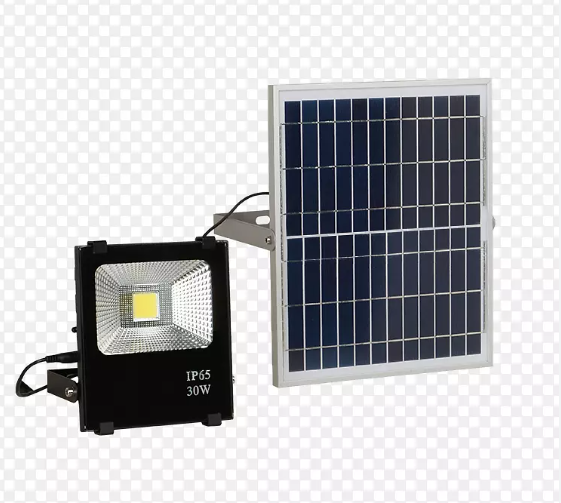
Core Conclusion: Solar LED lights do not consume grid electricity; their operation relies entirely on solar energy, thus achieving “zero electricity bill” lighting for users.
I. Working Principle: Closed-Loop Energy System
A solar LED light is an independent microgrid system. Its energy flow path is:
Solar Energy → Electrical Energy → Storage → Usage.How bright are solar LED lights
- Power Generation: Solar panels convert sunlight into electrical energy, with no energy consumption in the process.
- Energy Storage: Lithium batteries store electrical energy, with a charging efficiency of approximately 85%-95%.
- Electricity Usage: The LED light consumes the electrical energy stored in the battery when it is working.
Throughout the entire process, the energy comes from free solar energy and is not connected to the municipal power grid, therefore no electricity bill is generated.
II. Energy Consumption Comparison with Traditional Lighting Fixtures
Lighting Fixture Type | Energy Source | Estimated Annual Electricity Cost (6 Hours of Lighting Per Day).Are solar-powered LED lights any good?
Traditional 60W Incandescent Lamp | Grid Power | Approx. $40-60
Ordinary 10W LED Lamp | Grid Power | Approx. $7-10
Solar LED Lamp | Solar Power | $0
For purchases, please add the following WhatsApp contact.
Note: Calculated based on the average US electricity price of $0.15/kWh
III. System’s Own Energy Consumption Characteristics
Although it does not consume grid power, its internal efficiency needs to be understood:
- Photovoltaic Conversion Loss: High-quality monocrystalline silicon solar panels have a conversion efficiency of approximately 20%, with the remainder converted into heat.
- Charge/Discharge Loss: Lithium-ion battery cycle efficiency is approximately 90%.
- Control Circuit Loss: Controller standby power consumption is approximately 0.1-0.3W.
Overall System Efficiency: The overall conversion efficiency from solar energy to light energy is approximately 15%-18%, but all losses originate from the solar energy itself and do not affect the user’s electricity costs.
A Comprehensive Guide to Common Solar Garden Light Installation Methods
IV. Practical Usage Precautions
- Sunlight Dependence: In areas with continuous cloudy or rainy weather, lighting duration will be shortened. This is due to energy source limitations, not a “power consumption” issue.
- Energy Efficiency Label Interpretation: Common certifications in overseas markets:
· ENERGY STAR: Certified products have high system efficiency.
· IP Rating: Represents waterproof and dustproof performance, indirectly affecting long-term reliability.
- Maintenance Energy Consumption: Only occasional cleaning of solar panels is required; no external power source is needed.
V. Quantification of Environmental Benefits
Taking a typical 20W solar LED street light as an example:
· Annual reduction in grid power consumption: Approximately 43 kWh
· Equivalent to a reduction in carbon dioxide emissions: Approximately 30 kg (based on coal power)
· Total energy savings over an 8-year lifespan: Over 340 kWh
Conclusion
For end users, solar LED lights are lighting devices with zero operating power consumption. Essentially, they replace the one-time product purchase cost with the electricity costs of traditional lighting fixtures over many years. In areas with ample sunshine, the investment payback period is typically 1-3 years, followed by many years of free lighting. When choosing a solar panel, pay attention to the match between its efficiency, battery capacity, and LED luminous efficacy to maximize its advantages.
Therefore, to answer the question “Do solar LED lights consume electricity?”: They do not consume any grid power and, as long as they are installed in a location with adequate sunlight, can be considered zero-energy devices.
One Comment