
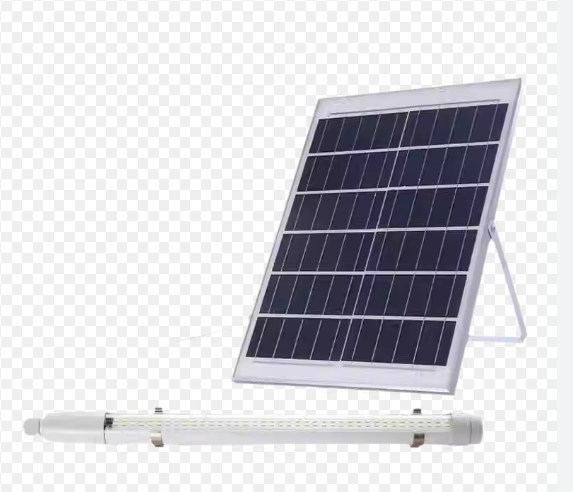
In the global wave of green energy transition, solar LED lights are becoming an ideal lighting choice for homes, businesses, and public spaces overseas due to their environmental friendliness, energy efficiency, and ease of installation. However, one of the most pressing questions for many consumers is: “How bright are solar LED lights? Can they meet my actual needs?” This article will provide an in-depth analysis of the technical characteristics, applicable scenarios, and overseas usage recommendations for solar LED lights in terms of brightness performance. Outdoor Waterproof Performance and Usage Effect of Solar Garden Lights
I. Brightness Parameters: From Lumens to Practical Luminous Efficacy
The brightness of solar LED lights is primarily measured in lumens (Lumens). Currently, the market offers a wide range of brightness levels for solar LED lights:
- Decorative lighting (e.g., ambient lighting): Typically 50-200 lumens, suitable for creating a warm and soft nighttime environment;
- Functional lighting (e.g., path lights, porch lights): Brightness between 200-600 lumens, sufficient for daily walking and safety lighting needs;
- High-brightness lighting (e.g., security lights, plaza lighting): Up to 800-2000 lumens, with some professional models even higher, suitable for areas requiring strong light coverage.
It’s worth noting that color temperature also affects the perceived brightness. For example, neutral white light of 4000K-5000K is visually brighter and clearer, suitable for security and work areas; while warm white light of 2700K-3000K is more inviting and suitable for courtyards and leisure spaces.
For purchases, please add the following WhatsApp contact.
II. Technological Guarantee: High-Efficiency Photovoltaic Conversion and Intelligent Control
The brightness performance of solar LED lights relies on three core technologies:
- High-Efficiency Solar Panels: Monocrystalline silicon solar panels achieve a conversion efficiency of over 22%, ensuring full charging even under limited sunlight conditions (such as Nordic winters or rainy regions);
- High-Capacity Energy Storage Battery: Advances in lithium battery technology (such as lithium iron phosphate) enable lights to provide stable brightness continuously on cloudy or rainy days, with some products supporting 3-5 cloudy or rainy days of continuous use; A Comprehensive Guide to Common Solar Garden Light Installation Methods
- Intelligent Light Control System: Through photosensors and infrared human body sensors, the lights can automatically adjust the brightness mode (such as constant light, sensor-activated light, and energy-saving light), extending usage time while ensuring lighting effect.
III. Overseas Scenarios Adaptation: Locally Tailored Brightness Design
Environmental differences in different countries and regions significantly affect the brightness performance of solar LED lights, requiring targeted selection:
- Sunny Regions (e.g., the Middle East, Australia, Southwestern United States): Medium-brightness products can be selected to ensure high brightness output at night despite ample sunshine.
- Rainy and Cloudy Regions (e.g., Western Europe, Southeast Asia during the rainy season): Products with brightness compensation functions are recommended to automatically optimize output efficiency under low charging conditions.
- High-Latitude Regions (e.g., Canada, Northern Europe): Short winter daylight hours necessitate large-capacity batteries and high-power solar panels to maintain basic lighting brightness.
IV. Practical Application Recommendations: Matching Needs and Optimizing Installation
Overseas users can refer to the following recommendations based on their specific needs when purchasing:
- Courtyard and Garden Lighting: Path lights should have a brightness of 200-400 lumens, with an installation spacing of 3-5 meters. Ambient lights can be combined with multiple lights, using a distributed design to improve overall brightness.
- Security Lighting: Products with human body detection and strong light activation functions should be selected. When triggered, the brightness can reach over 800 lumens, effectively warning of potential risks.
- Public and Commercial Areas: High-brightness integrated solutions are required. For example, solar streetlights can achieve a brightness of over 3000 lumens. Optimize lighting by tilting the solar panels and avoiding obstruction.How long does it take to charge a solar LED light?
V. Maintenance and Calibration: Key to Long-Term Stable Brightness
- Regularly Clean Solar Panels: Dust, snow, or bird droppings can reduce charging efficiency. It is recommended to clean them every 2-3 months.
- Avoid Shading and Adjust Angle: Adjust the orientation of the solar panels according to seasonal changes (south in the Northern Hemisphere, north in the Southern Hemisphere) to ensure maximum solar radiation absorption.
- Special Winter Maintenance: In extremely cold regions, choose low-temperature resistant batteries (e.g., those that can operate at -20℃) and appropriately raise the installation height to avoid snow accumulation.
VI. Future Trends: Brighter, Smarter, More Integrated
With technological advancements, solar LED lights are developing in the following directions:
· Adaptive Brightness Adjustment: Real-time matching with variables such as weather and pedestrian traffic through environmental sensors and AI algorithms;
· Integrated Photovoltaic and Energy Storage Design: Improved brightness stability in cloudy and rainy environments, meeting continuous lighting needs for multiple days;
· Integration with Smart Home Systems: Supports remote adjustment of brightness modes via mobile app, adapting to personalized scenarios (e.g., party mode, energy-saving mode).
Conclusion
The brightness of solar LED lights is no longer a technological weakness; rather, it has become one of their advantages in adapting to diverse global needs. By scientifically selecting product parameters, rationally planning installation schemes, and combining maintenance with local environmental characteristics, solar LED lights can provide overseas users with a reliable, efficient, and environmentally friendly lighting experience. Whether it’s a Mediterranean holiday villa or a cozy cottage in a Nordic forest, a solar LED light with suitable brightness not only illuminates the night but also lights up a future of sustainable living.