
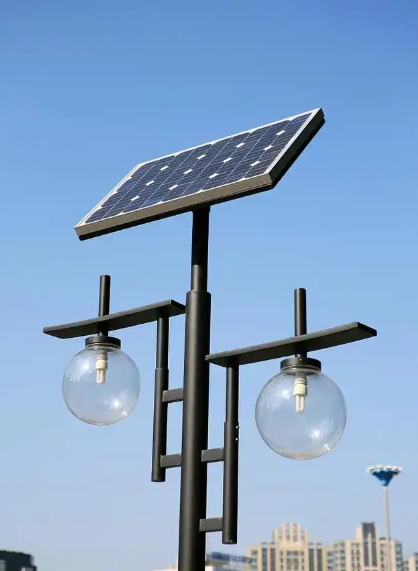
The height of a solar streetlight pole is a core parameter determining lighting effect, energy efficiency, and safety. Too high or too low a height will negatively impact the user experience: insufficient height leads to a small lighting range and wasted light due to overlapping; excessive height reduces light intensity, increases equipment costs, and complicates installation. There is no “uniform standard height” for the procurement and installation of solar streetlights. The key is to accurately adapt to factors such as the usage scenario, road width, and traffic flow. Below is a detailed analysis of the core influencing factors for height selection, adaptation standards for different scenarios, and selection and installation precautions to help you scientifically determine the height of your solar streetlight pole.Can Solar LED Lights Be Installed on Doorplates?
The core logic of pole height selection is “matching lighting needs with environmental conditions,” requiring consideration of three key factors. First, road width and lighting coverage. Pole height directly determines the lighting radius, which is typically 0.8-1.2 times the pole height. It is essential to ensure effective connection of the lighting range between adjacent streetlights, eliminating blind spots. Secondly, traffic flow and speed are important factors. Pedestrian and non-motorized vehicle areas require lower light intensity, so the light poles can be lower. Motorized vehicle areas require a wider field of vision, so the light poles need to be higher. Thirdly, the surrounding environment and safety requirements are crucial. If the streetlights are obstructed by trees, buildings, or other structures, the pole height should be appropriately increased to avoid these obstructions. At the same time, safety distances must be considered to prevent the poles from being too low and affecting the passage of large vehicles, or too high and increasing the risk of typhoons and lightning strikes.Solar Street Light Repair Tutorial
Standards for adapting solar streetlight pole heights to different scenarios, precisely matching actual usage needs:
- Rural country roads and courtyard paths: In these scenarios, the road width is typically 2-3 meters, primarily for pedestrian and non-motorized vehicle traffic, with basic safety lighting as the primary requirement. It is recommended to choose a 3-4 meter high pole, with a lighting radius covering 3-5 meters. The spacing between adjacent streetlights should be set at 8-12 meters to ensure uniform road surface lighting while controlling equipment costs. 1. Light poles of this height: Easy to install, requiring no large hoisting equipment, and the solar panels are less likely to be blocked by low vegetation, making them suitable for scattered rural roads and courtyards.Are Solar Streetlights Suitable for Rural Areas?
- Residential roads and scenic walkways: Roads are typically 3-5 meters wide, with residents and tourists as the main pedestrians. Nighttime pedestrian traffic is relatively concentrated, requiring a balance between lighting comfort and aesthetic appeal. A 4-6 meter high light pole is recommended, providing a lighting radius of 4-7 meters, with an adjacent spacing of 12-15 meters. This height avoids glare from direct sunlight on pedestrians while achieving wide-area, uniform illumination, suitable for main roads in residential areas and scenic walkways. If the residential area or scenic area has landscape design requirements, a simple tapered light pole can be chosen to enhance integration with the environment.
- Township roads and industrial park roads: Roads are 5-8 meters wide, primarily used by small motor vehicles and non-motorized vehicles, requiring a certain level of visibility and light intensity. For light poles in urban secondary roads and suburban main roads: These roads are 8-12 meters wide with high traffic volume and high speeds, requiring ample lighting to ensure safe driving. It is recommended to choose light poles 8-10 meters high with an illumination radius of 8-12 meters and an adjacent spacing of 20-25 meters. These poles typically use 30-50W solar-powered lights to achieve wide coverage, while also incorporating anti-glare design to avoid obstructing the view of oncoming drivers. Prior to installation, the light poles must be reported to the traffic management department to ensure compliance with urban road lighting regulations.
- For urban secondary roads and suburban main roads: These roads are 8-12 meters wide with high traffic volume and speeds, requiring sufficient lighting visibility to ensure driving safety. 5. Open areas such as plazas and parking lots: These areas lack fixed road widths and require large-area, uniform lighting. It is recommended to choose 6-8 meter high light poles, using symmetrical or circular installations to ensure no blind spots. If the plaza area is large, high-mast lights of 10 meters or more can be used in conjunction with high-power solar lights. However, note that high-mast lights have higher installation costs and stricter requirements for the installation angle and lighting conditions of the solar panels; a site survey must be conducted beforehand.
Three key points should be considered during selection and installation: First, the height of the light pole and the power of the light fixture should be matched. For every meter increase in height, it is recommended to increase the light fixture power by 5-10W to ensure adequate light intensity. Second, the selection should be based on local climate conditions. In typhoon-prone areas, light poles with a wind resistance rating of ≥12 should be selected, while appropriately reducing the height to improve stability. Third, during installation, the light pole must be vertical, and the foundation must be firmly poured with a depth of at least 1/10 of the light pole’s height to prevent tilting or collapse during use. In addition, regularly inspect the condition of the light poles. If rust, shaking, or other issues are found, repair and reinforce them promptly to ensure safe use.
In summary, the core of selecting the height of solar street light poles is “scenario adaptation,” which requires a comprehensive judgment based on factors such as road width, traffic type, and surrounding environment. Adhering to adaptation standards for different scenarios, while balancing cost, safety, and lighting effect, is essential to ensure that solar street lights function effectively. If unsure about the height selection for a specific scenario, it is recommended to consult a professional solar street light supplier or road lighting design agency to ensure scientific selection and compliant installation.