
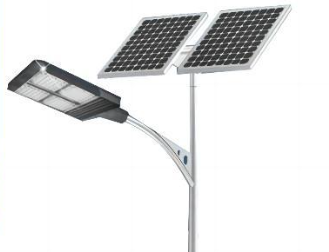
Solar street lights, with their advantages of energy saving, environmental protection, and no wiring required, have become the mainstream choice for outdoor lighting worldwide, widely used in rural roads, scenic trails, industrial parks, and other scenarios. However, in outdoor environments, lightning overvoltages generated during thunderstorms are a “hidden killer” for solar street lights. At best, they can damage core components such as photovoltaic modules and controllers; at worst, they can cause short circuits, fires, and other safety accidents. For those engaged in foreign trade, high-quality lightning protection design is not only crucial for product reliability but also a core competitive advantage in meeting the safety standards of different countries and regions. Today, we will systematically explain the key points of lightning protection design for solar street lighting systems.The Measurement of Light: The Spatial Science of Solar Streetlight Installation Distance
First, it is important to understand that the lightning protection design of solar street lights must adhere to the core principle of “prevention first, comprehensive protection,” constructing a full-link protection system against the two main forms of lightning damage—direct lightning strikes and induced lightning strikes. Direct lightning strikes are extremely destructive, directly hitting the light pole and photovoltaic panels, instantly generating huge currents and high temperatures; induced lightning strikes are more common, as the strong electromagnetic field generated by lightning induces overvoltages in the cables, which then infiltrate and damage electronic components along the line. Therefore, lightning protection design must cover four key aspects: lightning protection and current discharge, component protection, line shielding, and equipotential bonding.Solar LED Light Charging Time: Key Factors and Optimization Strategies
The lightning protection and current discharge system is the first line of defense against direct lightning strikes. The light pole, as the core supporting structure, should ideally be made of metal and also have lightning protection capabilities. If the light pole height exceeds 12 meters, a dedicated lightning rod must be installed at the top to ensure that the photovoltaic modules and lights are completely within the protection range of the lightning rod (i.e., the rolling sphere radius protection zone). Simultaneously, a dedicated grounding down conductor must be installed at the bottom of the light pole, using copper wire with a cross-section of not less than 16mm² to reduce resistance to lightning current transmission. The grounding device is the core of current discharge, employing a combination of a vertical grounding electrode and a horizontal grounding body. The vertical grounding electrode is made of galvanized steel pipe (2-3 meters in length), and the horizontal grounding body is made of galvanized flat steel, with the two reliably welded together. The grounding resistance must be ≤4Ω. In areas with high soil resistivity (such as deserts and rocky areas), a resistance-reducing agent can be added to improve current discharge efficiency.Are Solar LED Lights Really Suitable for Your Balcony?
Electronic component protection is a core focus of lightning protection design. Precision components such as photovoltaic modules, controllers, and batteries are extremely sensitive to overvoltage and require graded surge protectors (SPDs) for gradient voltage relief. The first level of protection is installed between the output of the photovoltaic module and the input of the controller, using a high-power DC SPD with a rated voltage matching the open-circuit voltage of the photovoltaic system and a maximum discharge current ≥20kA to intercept strong induced overvoltages introduced by outdoor lines. The second level of protection is installed at the connection lines between the controller and the battery/lighting fixture, using small to medium-sized SPDs to further reduce residual overvoltages and ensure voltage stability within the component’s tolerance range. Furthermore, controllers with integrated lightning protection functions are preferred, as they have built-in overvoltage and overcurrent protection circuits, forming dual protection.
For purchases, please add the following WhatsApp contact.
Line shielding and equipotential bonding effectively reduce the risk of induced lightning strikes. The photovoltaic cables and power lines of solar streetlights are all shielded cables, with reliable grounding at both ends of the shielding layer to form an electromagnetic shielding network, weakening lightning electromagnetic field interference. When laying cables, avoid parallel and close contact with metal light poles, maintaining a distance of ≥30cm. The portion laid on the ground must be protected by conduit with proper grounding. Simultaneously, reliably connecting metal components such as light poles, photovoltaic brackets, distribution boxes, and grounding devices forms an equipotential body, preventing potential differences between different components during lightning strikes and thus avoiding electric shock damage.
Export products need to be adapted to the lightning protection standards and climate characteristics of different regions. For example, tropical regions such as Southeast Asia and South America experience frequent thunderstorms, requiring the use of SPDs with a maximum discharge current ≥40kA and enhanced grounding systems; Europe and North America have strict safety certification requirements, necessitating products with CE and UL certifications, and lightning protection parameters conforming to local standards; high-altitude areas (such as the Alps) have thin air and long lightning breakdown distances, requiring increased lightning rod height to expand the protection range. Clearly indicating lightning protection parameters and applicable regions in product specifications can significantly increase customer trust.
In short, lightning protection design for solar streetlights is a systematic project that requires coordinated protection across all components while adapting to the regional characteristics of the target market. High-quality lightning protection design not only reduces after-sales failure rates but also enhances the product’s market competitiveness. Hopefully, this popular science article will help foreign trade partners accurately control product quality and provide safe and reliable solar street light solutions for global customers.