
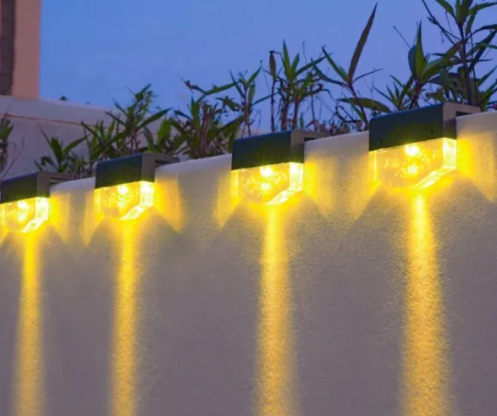
Sculpture of Light: The Humanistic Code in Solar Garden Light Design
When the gifts of technology—solar panels and LED light sources—are imbued with the thought of form, garden lights are no longer simple lighting tools, but transform into silent poems under the night sky and miniature sculptures on the earth. Their myriad forms are actually a subtle dialogue about nature, humanity, and function; every line and contour silently defines the realm of light and the temperament of the night.Solar Garden Light Automatic Switch Setup
Following the path of nature is the most authentic and vibrant language of garden light design. Designers often draw inspiration from all things in the world: like a warm pebble, quietly lying in the grass, emitting a faint halo; like a budding or blooming lily or lotus, allowing light to filter through the simulated petal texture, casting dappled shadows; or imitating the form of a fluttering butterfly or a graceful dragonfly, using light as wings, as if ready to take flight from the leaf tip at any moment. What to do if your solar streetlights are not working?The core philosophy of this biomimetic design is “disappearance” and “integration.” They do not attempt to conquer or disrupt the order of nature, but rather humbly become an extension of the landscape. Their light is mostly soft and diffused, with a color temperature often leaning towards a warm yellow, like moonlight filtering through leaves, aiming to create a tranquil, wild, and naturally harmonious atmosphere, making one feel as if the light is a breath of night that inherently belongs to this place.
For purchases, please add the following WhatsApp contact.
In contrast, geometric modernism plays a rational symphony. Abstract cubes, clean cylinders, simple lines and facets constitute the skeleton of this type of design. They do not imitate any specific object, but rather express the intervention of human reason and order through pure formal beauty. These lamps often feature striking materials, such as cool stainless steel, warm frosted glass, or clean acrylic; their shape itself is a visual focal point. The light they emit is also more direct and clear, often using pure white or neutral light to delineate the clear boundaries between their own form and the surrounding plants and paths. In minimalist gardens, modern architectural terraces, or well-ordered courtyards, these lights act like punctuation marks of light, infusing the space with a refined, stylish, and contemporary aura, showcasing the dialogue and tension between the artificial and the natural in form.
Reasons Why Solar Garden Lights Don’t Work at Night
Furthermore, the infusion of cultural imagery imbues garden lights with a narrative quality that transcends time. A solar-powered light designed in the style of an antique stone lantern can instantly bring the profound tranquility and serenity of Japanese “wabi-sabi” philosophy into a corner; lampshades with Chinese window lattice patterns or landscape silhouettes can project impressionistic light and shadow paintings onto whitewashed walls; while Mediterranean-style terracotta pot shapes, classic European column capitals, or torch forms evoke different regional styles and historical memories. These designs are condensed symbols of culture; their lighting design often serves to create an atmosphere—whether profound, elegant, or romantic—making a small garden a link between personal emotions and a broader cultural landscape.
Even more imaginative and creative designs aim to inspire childlike wonder and surprise. It might be an adorable little animal hiding behind a bush, ready to “encounter” you; or a fluffy ball of light resembling a dandelion seed, its points of light scattering light as lightly as seeds; or even a fun design that can interact and change color. They break the monotony of a garden night, adding lively energy and interactive emotional value, making them especially suitable for families with children or spaces seeking unique individuality.
Therefore, choosing the right solar garden light is not arbitrary. It is a declaration of aesthetics, an extension of the homeowner’s definition of the garden space—a natural retreat seeking a return to simplicity, an outdoor hall showcasing modern taste, a spiritual corner evoking cultural nostalgia, or a joyful family playground? Excellent design not only considers daytime aesthetics but also meticulously crafts the way, angle, and atmosphere of the light’s emission at night, making the light fixture itself and the light it emits an integral and organic part of the landscape.
Solar-powered garden lights, these “sculptures of light” that draw energy from sunlight and bloom in the darkness, silently tell the story of the designers’ and users’ attitudes toward nature, their understanding of beauty, and their visions for living spaces through their diverse shapes. With their silent light, they infuse our gardens with layers, stories, and soul, making every stroll after dusk a beautiful encounter with light, form, and atmosphere.