
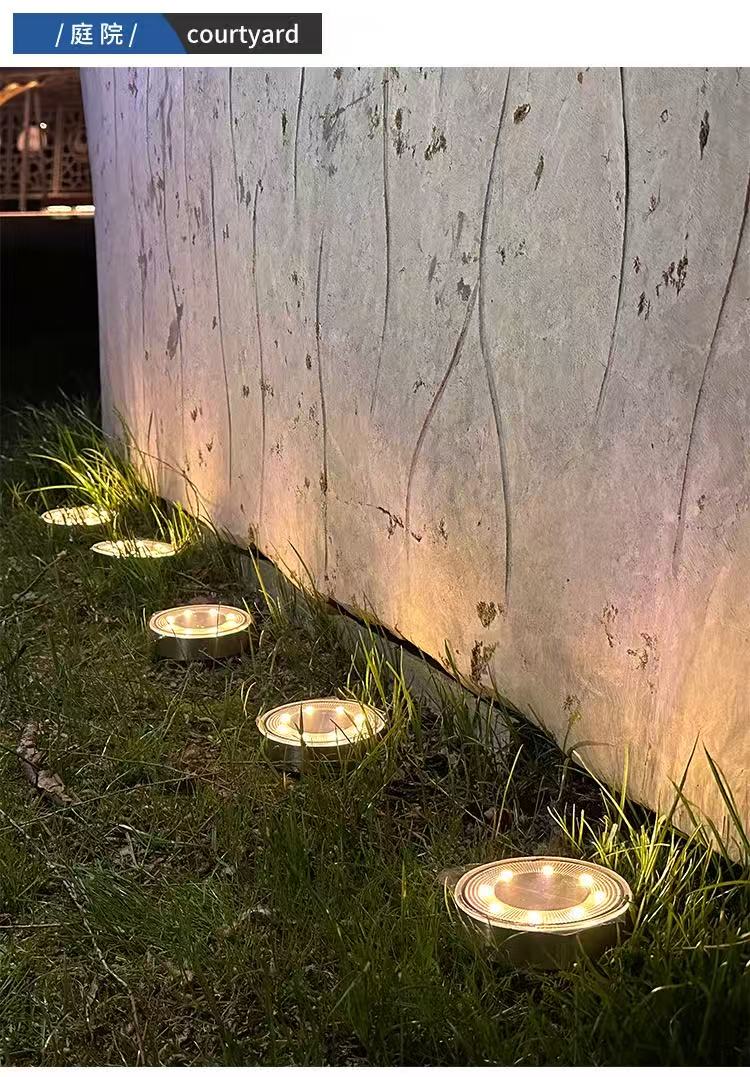
In the outdoor lighting field, solar garden lights with automatic sensing functions have become a popular choice for courtyard decoration and safety protection due to their core advantages of “intelligent start/stop and energy saving.” They eliminate the need for manual switching, accurately responding to changes in ambient light and human activity, automatically switching lighting states. This eliminates the hassle of frequent operation and maximizes energy efficiency. Many users have questions about the principles, advantages, and suitable scenarios for automatic sensing functions when purchasing and using them. Below is a detailed explanation of the relevant knowledge about automatic sensing in solar garden lights to help you fully understand and choose the right one.How to Adjust the Time of a Solar Street Light
The core principle of automatic sensing in solar garden lights is a dual triggering mechanism of “light sensing + human body sensing,” achieved through the coordinated work of three core components: a photoresistor, a human infrared sensor, and a controller. A photoresistor senses ambient light intensity. When the light intensity decreases to a preset threshold (typically 10-30 lux) in the evening, the sensor sends a signal to the controller, activating the sensing system. A human infrared sensor detects human activity within its range. When someone enters the sensing area (typically 3-8 meters in range and 120-180° in angle), the controller immediately commands the light to illuminate. After the person leaves the sensing area, the light automatically turns off or switches to a low-brightness energy-saving mode after a preset delay (generally 30 seconds to 5 minutes). During the day, when there is sufficient sunlight, the photoresistor triggers a charging mode, keeping the light off while the solar panel absorbs sunlight and converts it into electrical energy stored in the battery, ensuring normal operation at night.Can Solar LED Lights Be Connected to Electricity?
The automatic sensing function brings multiple core advantages to solar garden lights, meeting the needs of modern outdoor lighting. Firstly, it is extremely energy-efficient. Compared to constantly lit solar lights, the automatic sensing model only illuminates at high brightness when there is human activity, remaining in sleep or low-power mode at other times. This significantly reduces energy consumption, extends battery life, and ensures lighting needs during critical periods, even in cloudy or rainy weather. Secondly, it enhances ease of use. No manual switching or timer settings are required; it operates fully automatically after installation, making it particularly suitable for large outdoor areas such as courtyards, villas, and parking lots. This avoids energy waste or lighting problems caused by forgetting to turn the lights on or off. Thirdly, it strengthens safety protection. It automatically illuminates when someone approaches at night, providing clear lighting for pedestrians and drivers to prevent bumps and falls, and also deterring criminals, reducing safety hazards in outdoor areas.Solar Garden Light Ground-Plug Installation
When purchasing solar garden lights with automatic sensing functions, three core parameters should be considered to ensure suitability for your specific use case. First, sensing performance: prioritize models with adjustable sensing distance and settable delay time. Different scenarios require different approaches: a 3-5 meter sensing distance and a 30-second to 1-minute delay are suitable for courtyard walkways; for parking lots and areas around walls, a 5-8 meter sensing distance and a 1-3 minute delay are recommended. Second, waterproof rating: outdoor environments require protection from wind, rain, and dew. Choose products with an IP65 or higher waterproof rating to ensure the sensor and internal circuitry are protected from moisture, preventing sensor malfunction or short circuits. Finally, regarding battery capacity and light source quality, it is recommended to choose a model with a lithium battery (capacity of 2000mAh or higher) paired with an LED light source. Lithium batteries offer long battery life and extended lifespan, while LED light sources provide high brightness and low energy consumption, ensuring the stability and clarity of the sensor lighting.
Proper installation and maintenance can further enhance the stability of the automatic sensing function. Two key points should be noted during installation: First, the sensor installation angle should face the direction of frequent pedestrian activity, avoiding obstruction by trees or walls, and keeping it away from streetlights, garden lights, and other light sources to prevent light interference that could cause false triggering. Second, the installation height is recommended to be 1.5-2.5 meters above the ground. This height maximizes the sensing range and reduces the risk of human damage. For routine maintenance, regularly clean the dust and fallen leaves from the solar panel surface to ensure charging efficiency; also check the sensor surface for dirt or obstructions. If the sensor becomes insensitive, fine-tune the installation angle or wipe the sensor probe with a soft cloth. Additionally, in low-temperature winter environments, the activity of lithium batteries may decrease; therefore, it is advisable to clean snow around the light fixture to avoid affecting the sensing and lighting effects.
In summary, the automatic sensing function of solar garden lights achieves a perfect balance between energy saving and convenience through an intelligent triggering mechanism, making them suitable for various outdoor scenarios. When purchasing, focusing on sensing performance, waterproof rating, and battery life, and paying attention to details during installation and maintenance, will allow you to fully leverage their intelligent lighting advantages. Whether creating a warm courtyard night scene or enhancing the safety of outdoor areas, solar garden lights with automatic sensing functions are an excellent choice that combines practicality and cost-effectiveness.