
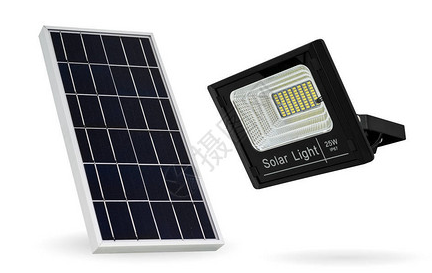
Solar LED lights are widely used in courtyards, roads, scenic areas, and other settings due to their zero electricity cost and energy-saving advantages. Charging efficiency, as a core indicator determining their battery life, directly impacts the user experience—products with high charging efficiency can maintain stable operation even during brief periods of cloudy or rainy weather, while those with low efficiency may end up lasting only one night after a day in the sun. Many users are confused when purchasing and using solar LED lights: How do I determine their charging efficiency? What factors affect charging performance? This article will break it down one by one, providing you with practical guidance.Which Solar Garden Lights Are Brightest?
The type and quality of the solar panel are the core foundation for determining charging efficiency. Currently, mainstream solar panels are divided into three categories: monocrystalline silicon, polycrystalline silicon, and amorphous silicon. Monocrystalline silicon panels have the highest conversion efficiency, reaching 18%-23%, enabling more efficient conversion of solar energy into electricity, making them suitable for areas with moderate sunlight. Polycrystalline silicon panels have a slightly lower conversion efficiency, around 15%-18%, but are more affordable and suitable for scenarios with ample sunlight. Amorphous silicon panels have a conversion efficiency of only 6%-10% and are easily affected by temperature, limiting their use to low-cost, simple lighting fixtures. Furthermore, the area of the solar panel also affects charging efficiency; with the same material, a larger area allows for a wider range of solar energy reception, resulting in faster charging.Solar LED Light Color Temperature Selection
Sunlight conditions are a key external factor affecting charging efficiency, including light intensity, duration of sunlight, and angle of illumination. Sufficient sunlight is a prerequisite for efficient charging; solar panels reach their optimal charging state under sunny weather conditions. Cloudy, rainy, or foggy weather significantly reduces sunlight intensity, potentially decreasing charging efficiency by more than 50%. Simultaneously, the duration of sunlight directly determines the total daily charging volume; in areas with lower latitudes and longer sunshine hours, the charging effect of solar LED lights is more guaranteed. Furthermore, the angle of sunlight is also crucial. Charging efficiency is highest when sunlight shines perpendicularly on the solar panel. Therefore, the tilt angle of the solar panel needs to be adjusted according to the local latitude during installation, generally recommended to be 30°-45° to the ground.Which Material Is Best for Solar Garden Lights?
Battery performance and system compatibility also indirectly affect charging efficiency. Solar LED lights are typically paired with lithium or lead-acid batteries. High-quality lithium batteries have high charge/discharge efficiency and low internal resistance, allowing for more efficient energy storage; while inferior lead-acid batteries have high internal resistance, resulting in greater energy loss during charging and a shorter lifespan. In addition, the performance of the controller is critical. A high-quality controller can intelligently regulate charging current and voltage, preventing overcharging and over-discharging, and improving charging stability; a poor-quality controller may lead to decreased charging efficiency or even damage to the battery. Simultaneously, the rationality of the circuit design also affects energy transfer efficiency; the resistance loss in inferior circuits will waste some electrical energy.
For purchases, please add the following WhatsApp contact.
To improve the charging efficiency of solar LED lights, consider these three points when purchasing and using them: First, prioritize products with monocrystalline silicon solar panels, paired with high-quality lithium batteries and brand-name controllers; second, avoid obstructions during installation to ensure the panels receive ample sunlight and adjust the tilt angle appropriately; third, perform regular maintenance, promptly cleaning dust and fallen leaves from the panel surface to prevent interference with light reception. Additionally, if your home has poor lighting conditions, choose models with removable batteries, allowing for indoor charging during cloudy or rainy weather to ensure normal operation.
In summary, the charging efficiency of solar LED lights is affected by multiple factors, including the quality of the solar panel, lighting conditions, and battery performance. Focusing on the quality of core components during purchase and paying attention to installation and maintenance will maximize charging efficiency, allowing solar LED lights to provide more stable lighting effects and truly achieve a balance between energy conservation, environmental protection, and practical convenience.