
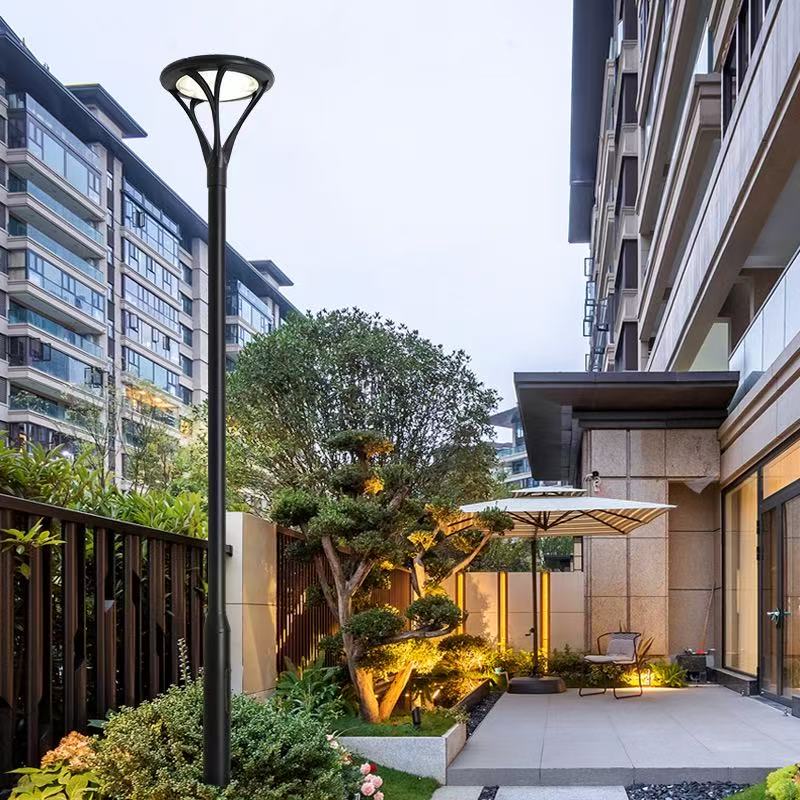
Solar street lights are widely used in rural roads, courtyards, and other scenarios due to their energy-saving and wiring-free advantages. However, long-term outdoor use inevitably leads to malfunctions such as failure to light up, insufficient brightness, and flickering. Mastering basic repair methods can quickly solve common problems and reduce maintenance costs. This tutorial will break down the repair process of solar street lights in detail, covering three core parts: pre-repair preparation, common fault diagnosis and repair, and safety precautions. Even beginners can easily get started.Are Solar Streetlights Suitable for Rural Areas?
Preparation before repair is the foundation for ensuring repair safety and efficiency. It is necessary to prepare tools, take safety precautions, and make a preliminary fault diagnosis. Tools include insulated screwdrivers, multimeters, wrenches, voltage testers, cleaning cloths, rust remover, and waterproof tape. If battery replacement is involved, a matching lithium or lead-acid battery is also required. For safety precautions, always ensure the street light is powered off before repair. This can be done by turning off the controller power or disconnecting the battery connection. For outdoor repairs, wear insulated gloves and non-slip shoes, and avoid working at heights without a safety harness. Repairs are strictly prohibited during thunderstorms to prevent the risk of electric shock. Preliminary fault diagnosis can be done through observation: If the streetlight is completely off, prioritize checking the power supply, battery, or controller; if the brightness is insufficient, focus on checking the solar panel or light source; if it flickers, it’s likely due to poor wiring contact or a controller malfunction.Can Solar Streetlights Be Used on Cloudy Days?
Common Fault 1: Streetlight completely off. First, check the battery. Use a multimeter to measure the battery voltage. If the voltage is below 10V (for a 12V system), the battery is either depleted or damaged. If it’s depleted, remove the battery, fully charge it, and reinstall it to see if it recovers. If the voltage is still too low or it cannot be charged after charging, replace it with a battery of the same model. When replacing, ensure the positive and negative terminals are connected correctly and wrap the connection with waterproof tape. Second, check the controller. Open the control box and observe if the controller indicator light is on. If it’s off and the battery voltage is normal, the controller may be damaged and needs to be replaced with a controller of matching power. During installation, ensure the wiring is connected according to the positive and negative markings to avoid reverse connection. The third step is to check the light source. Use a multimeter to check the voltage across the LED beads. If there is voltage but the light doesn’t turn on, the beads are damaged and the LED module needs to be replaced. When replacing, ensure a waterproof seal and that the lamp body is tightly closed.Analyzing the Illumination Range of Solar Streetlights
Common Fault Two: Insufficient brightness or shortened battery life. The core cause is often low solar panel charging efficiency or battery aging. First, check the solar panel for dust, leaves, bird droppings, etc., and wipe it clean with a cloth. Scratches or cracks may affect photoelectric conversion efficiency. Minor scratches can be repaired with a special repair agent; severe damage requires replacement of the solar panel. Next, use a multimeter to measure the open-circuit voltage of the solar panel. Under normal conditions, the voltage should be 18-24V (12V system) on a sunny day. If the voltage is too low, it may be a solar panel malfunction or poor wiring contact. Check if the connection wires are loose, re-plug and re-secure them. If the problem persists, replace the solar panel. Finally, check the battery. If the battery is over 5 years old, it’s likely due to capacity degradation; replace it with a new battery.
Common Fault Three: Streetlight flickering or intermittent operation. The main cause is poor wiring contact or controller malfunction. First, check all connection interfaces, including the connections between the solar panel and controller, controller and battery, and controller and light source. If any are loose, oxidized, or corroded, clean the interfaces with a rust remover, reconnect securely, and seal with waterproof tape. If the interfaces are normal, check the controller. Connect the controller to a spare battery for testing. If it still flickers, it indicates a fault in internal components of the controller, requiring replacement. Additionally, if the streetlight has a sensor function, obstruction of the sensor probe can also cause flickering; cleaning the probe surface will restore normal operation.
Three key precautions must be remembered during the repair process: 1. Wiring connections must strictly distinguish between positive and negative terminals, especially the connection between the battery and controller; reversing the connection may burn out components. 2. All interfaces must be waterproofed after repair. Outdoor environments are prone to moisture penetration; waterproof tape must be tightly wrapped, and sealant can be applied after tightening the control box cover to enhance waterproofing. 3. After repair, testing is necessary. Check the solar panel charging status during the day (the controller’s charging indicator light should be on) and observe the streetlight’s illumination at night to ensure the fault is completely resolved. For complex malfunctions, such as damaged light poles or extensive aging of internal wiring, it is recommended to contact professional repair personnel to avoid secondary damage caused by self-repair.
Following the above steps can resolve most common malfunctions of solar streetlights. In routine maintenance, it is recommended to clean the solar panels quarterly and check the wiring and battery status annually to prevent malfunctions. Mastering basic repair skills ensures the long-term stable operation of solar streetlights and provides continuous lighting for rural roads, courtyards, and other scenarios, reducing later maintenance costs.