
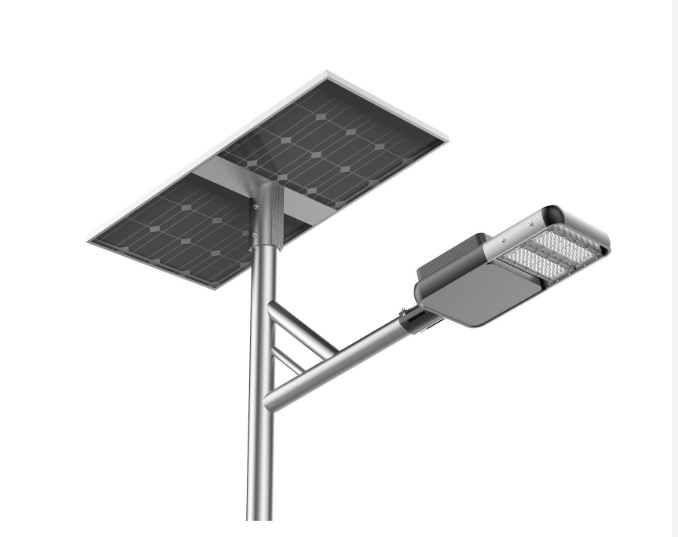
Among the core components of solar streetlights, the power of the solar panel directly determines the energy conversion efficiency, battery life, and lighting stability. Selecting the appropriate solar panel power for the chosen scenario avoids both the inconvenience of insufficient power causing shutdowns on cloudy or rainy days and the wasteful cost of excessive power, making it a crucial step in solar streetlight selection. Whether it’s rural roads, residential courtyards, parks, or industrial parks, different lighting needs correspond to different solar panel power selections. Precise matching maximizes the environmental and energy-saving advantages of solar streetlights.Solar Streetlight Brightness Adjustment
The core function of solar panel power is “efficient energy storage.” Solar panels absorb sunlight and convert it into electrical energy. The higher the power, the more electrical energy converted per unit time, resulting in more energy stored in the lithium battery. Typically, the power output of a solar panel is directly related to the LED light source power of the streetlight, the duration of illumination, and local sunshine conditions. For example, assuming an LED light source power of 30W requires 8 hours of illumination per day, in areas with an average of 4 hours of sunshine per day, a solar panel of at least 60W is needed to ensure sufficient power. If sunshine conditions are poor (less than 3 hours of sunshine per day), then a power output of at least 80W is required to avoid power outages on cloudy or rainy days. Conversely, if the light source power is only 15W, using an excessively high-power solar panel will increase procurement costs and waste resources.Solar-Powered LED Strip Lights with Human Body Sensors
Different application scenarios have significantly different power requirements for solar panels; precise matching is crucial. Rural road lighting needs are relatively low, with LED light sources typically at 15-20W, providing 6-8 hours of illumination per day. If local sunshine is abundant (over 4 hours per day), 20-40W solar panels are sufficient. Main roads in residential areas and parks require slightly higher lighting intensity, with light sources at 30-40W and illumination durations of 8-10 hours, necessitating 60-80W solar panels to ensure stable nighttime lighting. Industrial parks and large squares require light sources exceeding 50W and sustained high-brightness illumination, necessitating 100W or higher high-power solar panels, with dual-solar-panel designs to enhance energy storage efficiency. Furthermore, in high-latitude, rainy, and foggy regions with short sunshine hours and weak light intensity, the base power needs to be increased by 20%-30% to ensure lighting needs during inclement weather.Can Solar LED Lights Have Replaceable Batteries?
When selecting solar panel power for solar streetlights, in addition to matching the scene requirements, attention should also be paid to core details to improve the user experience. In terms of materials, monocrystalline silicon solar panels are preferred, as their conversion efficiency can reach over 22%, making them more suitable for areas with average sunlight conditions than polycrystalline silicon. Pay attention to the solar panels’ wind resistance, hail resistance, and waterproof performance; for outdoor applications, choose products with a protection rating of ≥IP65 to extend their lifespan. Simultaneously, it is recommended to choose intelligent controllers that support power adaptation, automatically adjusting charging efficiency based on sunlight intensity to avoid overcharging or undercharging due to power mismatch. Furthermore, verify the accuracy of the solar panel’s power rating during procurement to avoid inferior products with falsely advertised power ratings affecting performance.
In summary, the power rating of solar panels for solar streetlights is not necessarily the highest possible; rather, it should be precisely matched based on lighting needs, local sunlight conditions, and application scenarios. Appropriate power ensures stable nighttime lighting while controlling procurement and maintenance costs, maximizing the environmental and energy-saving value of solar lighting. Whether it’s road renovation for municipal projects or outdoor lighting upgrades for businesses and homes, clearly defining needs and scientifically selecting solar panel power is crucial to making solar streetlights a truly worry-free, energy-efficient, and durable lighting solution, safeguarding green and low-carbon travel.