
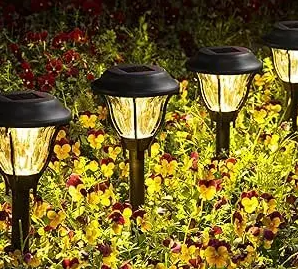
As solar technology brightens gardens worldwide, solar-powered lights have become essential for enhancing outdoor ambiance and safety. However, these fixtures endure constant exposure to sun, rain, wind, and temperature swings. Beyond the performance of internal components like the solar panel, battery, and LED chip, the choice of external materials—the light’s “armor”—is critical for longevity, aesthetics, and overall value. So, which materials best withstand the test of time and elements?Shining for a Decade: How Solar LED Lights Use Technology to Redefine Longevity
I. Main Structural Materials: The Foundation of Durability
The pole, base, and housing form the light’s skeleton. Priority must be given to mechanical strength, weather resistance, and corrosion prevention.
- Metal Materials (Stainless Steel, Die-Cast Aluminum, Cast Iron)
· Advantages: This is the durability benchmark. Stainless steel (grades 304/316) offers superior rust and corrosion resistance, handling harsh climates with ease for the longest lifespan. Die-cast aluminum is lightweight yet strong; with treatments like powder coating, it resists corrosion well and allows for diverse, intricate designs. Cast iron provides a classic, rugged look and is highly durable when properly finished.Solar Garden Light Buying Guide
· Considerations: Generally higher in cost and weight. Low-quality alloys or poor finishing can still lead to corrosion. - Engineering Plastics (e.g., ABS, PP, UV-Stabilized Polymers)
· Advantages: Lightweight, cost-effective, and excellent for insulation. They enable versatile, intricate shapes (like stone or wood textures). High-quality variants include UV stabilizers to resist fading, brittleness, and degradation from sunlight.
· Considerations: Inherently less robust than metal. Inferior plastics may fade, become brittle in cold weather, or offer lower impact resistance. Choose products labeled “UV-resistant” that feel solid and hefty.Winter Usage Guide and Performance Analysis for Solar LED Lights - Wood & Composite Materials
· Natural Wood: Offers a timeless, organic aesthetic but requires maintenance. Only pressure-treated woods (e.g., cedar, teak) are suitable for long-term outdoor use.
· Wood-Plastic Composites (WPC) & Resins: Provide the natural look of wood with much better weather resistance and minimal maintenance, making them a practical choice.
Verdict: For maximum durability and a “decade-plus” lifespan, stainless steel or high-quality die-cast aluminum is the top choice. For budget-friendly or specific stylistic needs, opt for thick, UV-stabilized engineering plastics.
II. Lampshade & Diffuser Materials: Shaping the Light
The cover protects the LED and critically defines light quality and diffusion.
For purchases, please add the following WhatsApp contact.
- Glass (Especially Tempered Glass)
· Advantages: Unmatched clarity and light transmission, with no yellowing over time. Tempered glass is highly resistant to thermal shock and impact. It feels premium and is easy to clean.
· Considerations: Heavier and more expensive. Requires careful handling to avoid breakage. - Polycarbonate (PC)
· Advantages: Extremely high impact resistance (virtually unbreakable) with very good light transmission. Often used for rugged applications. Can be textured for soft, glare-free diffusion.
· Considerations: Premium, UV-coated polycarbonate is essential to prevent hazing or yellowing from long-term sun exposure. - Acrylic (PMMA)
· Advantages: Excellent optical clarity, similar to glass, but lighter and more affordable. Good weather resistance.
· Considerations: More prone to scratching than polycarbonate and can become brittle in extreme cold. - Ordinary Plastics
· Disadvantages: Often low-cost but prone to rapid fading, yellowing, and becoming brittle, which severely degrades light output and appearance. Not recommended for quality fixtures.
Verdict: For lasting, beautiful illumination, tempered glass or high-quality, UV-coated Polycarbonate/Acrylic diffusers are ideal.
III. Smart Selection: Integrating Material, Design, and Environment
An excellent solar garden light harmonizes materials with intelligent design:
· Climate Adaptation: Choose stainless steel for coastal/humid regions. In areas with hail or high impact risk, polycarbonate shades are best.
· Check Craftsmanship: Look for robust seals, tight assembly, and a stated IP (Ingress Protection) rating of at least IP44 for weather resistance. Finishes should be even and durable.
· Balance Style & Function: Let materials complement your garden’s theme—wrought iron for classic styles, sleek aluminum for modern spaces, and composites for rustic looks.
Conclusion
Selecting a solar garden light is choosing a guardian for your nights. The material choice dictates its endurance and performance. The optimal combination is a “metal skeleton” with a “high-clarity polymer or glass lens”—a body of stainless steel or die-cast aluminum paired with a polycarbonate or tempered glass diffuser. This pairing ensures resilience against the elements while providing consistent, beautiful light for years.
Invest in materials that endure, and enjoy illumination that lasts. A well-chosen solar light is a lasting investment in the beauty, safety, and sustainability of your outdoor space.